
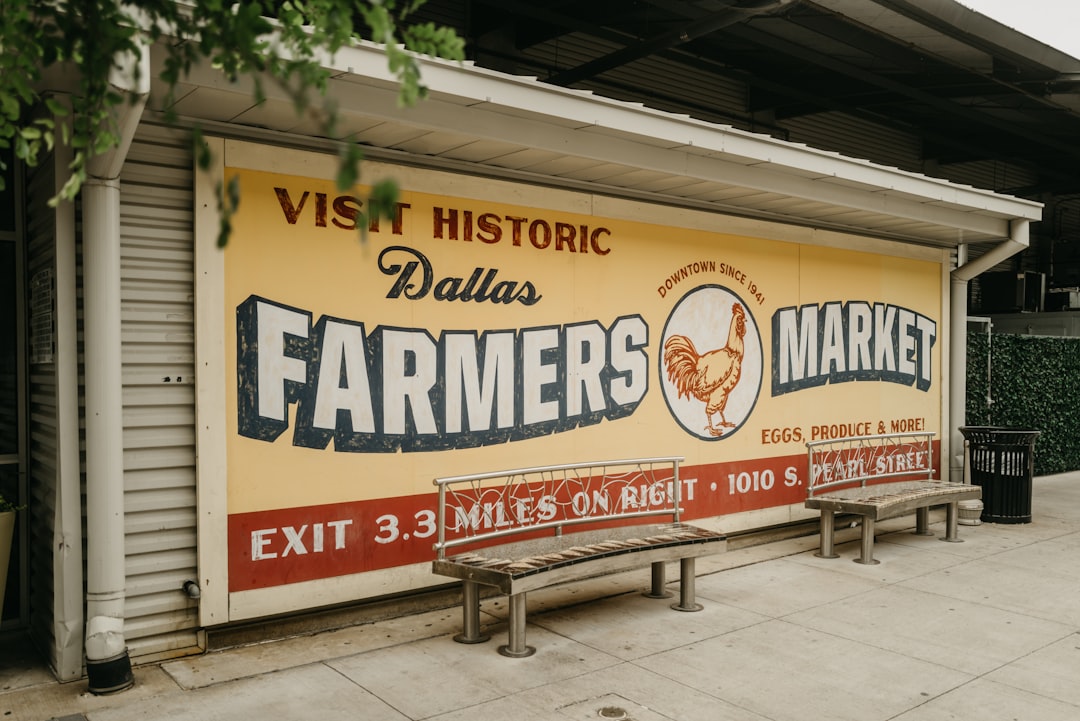


Slow sales days are part of every food vendor's life. The rainy Saturday where three people stopped by your booth. The month where your online orders dropped by half for no obvious reason. The new market that turned out to have less foot traffic than your neighborhood garage sale.
These days test something that no business plan prepares you for: your motivation.
The short version: Slow sales are normal and they do not mean your business is failing. Every vendor — including the ones who now sell out regularly — has gone through dry spells. The key to staying motivated is separating what you can control (pricing, product quality, which markets you attend, how easy it is to order from you) from what you cannot (weather, foot traffic, seasonal demand). Track your numbers so you know whether a slow period is a trend or a blip. Set small, specific goals instead of vague ones. And protect the part of the business you enjoy — because motivation follows action, not the other way around.
Slow sales hurt more for food vendors than for most businesses because the connection between effort and outcome is so direct. You spent Thursday night baking. You woke up at 5 AM Saturday. You drove 45 minutes to the market. You set up your booth in the cold. And then you sold $67.
The gap between effort and reward feels personal in a way that a bad day at an office job does not. You made every single product with your own hands. When it does not sell, it feels like rejection — of your food, your skill, and your time.
There is also the visibility problem. At a farmers market, you can see the vendor across from you selling steadily while your table sits quiet. You watch customers walk past your booth and stop at someone else's. That kind of direct comparison does not happen in most businesses, and it makes slow days feel even worse.
Common triggers that tank a food vendor's motivation:
This is why motivation problems for food vendors are rarely about laziness. They are about discouragement. And discouragement is a reasonable response to spending 12 hours on a market day that nets you $30 after costs.
The question is not "how do I force myself to keep going?" It is "how do I make the business worth continuing?" Those are two very different questions with very different answers.
When sales are slow, the most productive thing you can do is separate what you can control from what you cannot. This is not a motivational exercise — it is a strategic one. You stop wasting energy on things that will not change and redirect it to things that will.
What you CANNOT control:
What you CAN control:
Focus on the second list. Every single item on it is an action you can take this week. None of them require motivation — they require a decision. And decisions are easier than feelings.
One slow market day is a blip. Four slow market days in a row is a pattern that needs investigation. The ability to tell the difference is what separates vendors who panic from vendors who adjust.
Here is how to tell the difference:
| Situation | What It Probably Is | What to Do |
|---|---|---|
| One bad day after several good ones | A blip (weather, timing, random luck) | Nothing — keep going |
| Two to three slow days in a row | Possible pattern | Check: did something change at the market? New competitors? Different time slot? |
| A month of declining sales | A trend | Investigate pricing, product fit, and market quality seriously |
| Slow sales every single market since you started | Wrong market or wrong product | Try a different market or simplify your product line to your strongest sellers |
| Slow period that matches last year's slow period | Seasonal pattern | Normal — plan for it, budget for it, do not panic about it |
Track your revenue per market day over time. A simple spreadsheet or notebook with the date, market name, total sales, and total costs gives you the data to spot trends. Without data, every slow day feels like a crisis. With data, you can see whether you are actually declining or just experiencing normal fluctuations that happen to every vendor.
According to the USDA's research on farmers markets, seasonal variation of 20 to 40 percent in weekly sales is standard for direct-to-consumer food vendors. Your slow month is not a sign of failure — it is a predictable part of the business cycle.
A Homegrown storefront tracks your sales automatically, so you always know what sold, when, and for how much — no manual spreadsheet required. When you can see your actual numbers clearly, slow days lose their power to derail you.
Big, vague goals ("grow my business," "make more money," "get more customers") are useless when you are in a slump. They are too abstract to act on and too far away to feel achievable. When motivation is low, big goals feel like mockery.
Small, specific goals work because they give you something you can do today or this week:
Each of these is something you can do in the next few days. Each one moves the needle forward. And each one gives you a small win — which is what motivation actually needs to restart.
Motivation follows action, not the other way around. You do not need to feel motivated to raise your prices. You just need to do it. The motivation comes after, when you see that your revenue went up and nobody complained. You do not need to feel excited to post on Instagram. You just need to post. The excitement comes when someone comments "I will be there Saturday!"
This is not a mindset trick. It is how motivation actually works for most people. Action creates results, results create confidence, and confidence creates motivation. Waiting to feel motivated before acting is waiting for something that may never arrive on its own.
You are sitting at the market. It is 11 AM. You have sold $40. There are two hours left. Here is what to do — a specific playbook for a bad day, not vague advice about "staying positive."
For specific math on evaluating your market, check out how to calculate your booth ROI.
The fastest way to kill your motivation is to let the parts of the business you hate overwhelm the parts you love. Most food vendors love making food. They do not love managing orders through DMs, arguing with tent poles at 6 AM, or tracking expenses in a notebook at 11 PM.
When the admin drowns out the making, motivation dies. The solution is not to push through it — the solution is to fix the ratio.
Protect the making. Outsource or systematize the rest:
The vendors who stay motivated long-term are the ones who spend most of their time doing the work they love — baking, creating, connecting with customers — and as little time as possible on everything else.
Sometimes slow sales are not a motivation problem. They are a business problem wearing a motivation mask. If you have been at the same market for a full season and your numbers have not improved, the issue might be structural.
Signs that the problem is the business, not your mindset:
If this is the case, motivation alone will not fix it. You need to change something concrete. Actions to take when the problem is structural:
The Farmers Market Coalition offers resources for finding better-fit markets in your area.
For more strategies that do not cost money, read our guide on how to market your food business with no budget.
Yes. Sales at farmers markets fluctuate based on weather, season, holidays, local events, and random chance. Most vendors experience 20 to 40 percent variation in weekly sales throughout the season. What matters is the trend over months, not the result of any single day. Track your numbers weekly and evaluate monthly.
Give any market at least four to six visits before deciding it is not working. Your first two visits will almost always be your slowest because no one knows you yet. By visit four or five, you start building repeat customers, and that is when you can fairly evaluate the market's potential for your business.
If you have tried three or more markets over a full season and consistently underperformed, the issue is likely your pricing, product line, or product-market fit rather than the markets themselves. Raise your prices to correct levels, simplify to your best-selling two or three products, and ask repeat customers what they would buy more of. Sometimes the answer is surprising.
Only perishable products you cannot sell later. Discounting regularly trains customers to wait for the discount instead of buying at full price, which destroys your pricing power over time. If you have unsold baked goods at the end of the day, offering a small "end of day" deal is fine — but do not make it a habit or advertise it in advance.
Focus on what you can control this week: pricing, product quality, which markets you attend, and how easy it is for customers to reorder from you. Set one small goal for this week instead of a big goal for this year. Track your numbers so you can see progress even when it is gradual. And protect the part of the business you enjoy — if you still love making the food, the business is worth improving.
Consider closing if you have sold at multiple markets for a full season with correct pricing and still cannot break even, if you dread every aspect of the work consistently, or if the business is negatively affecting your health or relationships. There is no shame in deciding it is not for you — but make sure you have actually tried the fixes (pricing, market selection, ordering systems) before walking away. Most vendors who quit early had fixable problems they did not know were fixable.
Every vendor who has been at this for three or more years has stories about the slow days. The market where it rained and they sold $22. The month where nothing seemed to work. The morning they almost did not show up.
They showed up anyway. And the slow period ended. It always does.
Your job during the slow times is not to feel motivated. It is to make one small improvement and keep showing up. Fix your pricing. Try a new market. Set up online ordering. Post your schedule. Do one thing.
The motivation will follow. It always follows action.



