
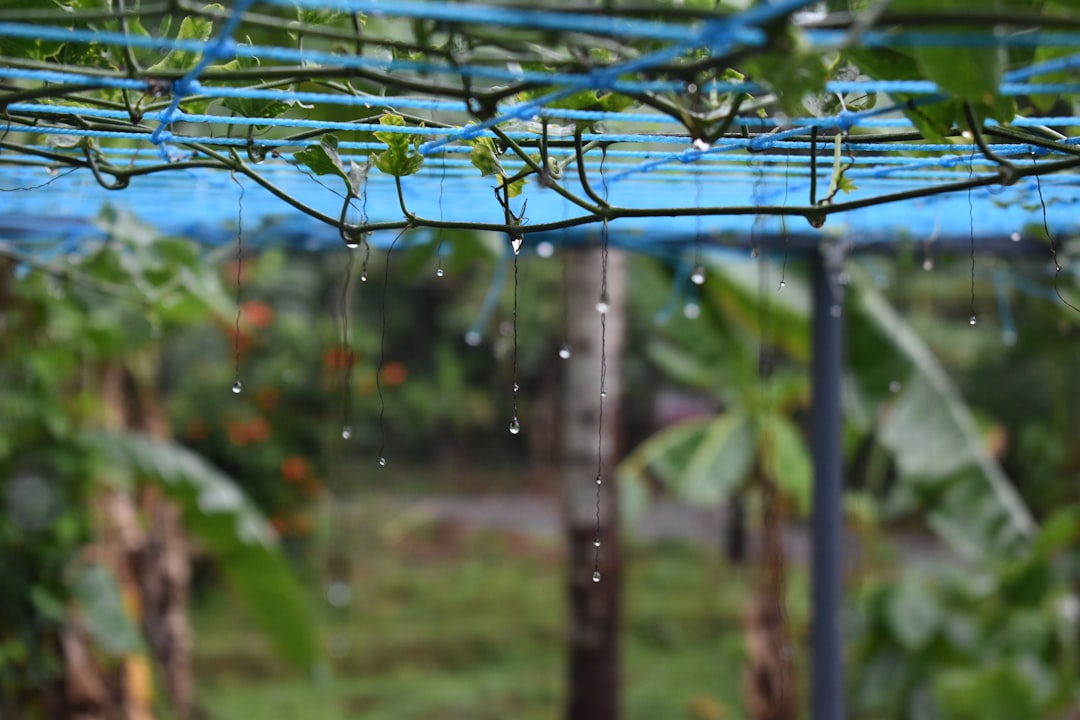


Every farm stand vendor has weeks where nobody shows up. It rains all day Saturday. The temperature drops. A holiday weekend pulls everyone out of town. Or there is no obvious reason at all — the stand is stocked, the weather is fine, and the road just goes quiet. These slow days are not a sign that your farm stand is failing. They are a normal part of operating a location-dependent, weather-dependent business. The vendors who thrive long-term are not the ones who avoid slow days — they are the ones who have a plan for them.
This guide covers what to do before, during, and after slow periods — from weather strategies to building revenue that does not depend on foot traffic.
The short version: Bad weather and slow traffic days are inevitable. The three best defenses are: (1) a pre-order system that generates sales before customers arrive, (2) a product mix that includes shelf-stable items you can sell another day, and (3) an online presence that captures sales when the stand is closed or empty. The worst response to a slow day is to sit at the stand watching the road. The best response is to use that time productively — prep inventory, update your online menu, message past customers, or close early and save the perishables for tomorrow.
The most effective strategy for handling slow days is to reduce your dependence on walk-up traffic in the first place. The vendors who are least affected by bad weather are the ones who have a pre-order system, an email or text list, and an online selling channel that works whether or not anyone drives by.
A pre-order system lets customers order and pay before they arrive. On rainy days, pre-order customers still show up because they have already committed and paid. Walk-up customers do not — they stayed home.
The math: if 30 percent of your weekly revenue comes from pre-orders, a rainy day that kills all walk-up traffic still leaves you with 30 percent of normal sales, zero waste on pre-ordered items, and a clear list of exactly what to bring.
The question is how to actually take those pre-orders. Instagram DMs work for a few regulars, but when 15 people are messaging you before a rainy Saturday asking what is available, confirming quantities, and arranging pickup times, the thread becomes unmanageable. Square Online charges transaction fees that eat into margins on a $12 produce box. Etsy is built for shipping, not local pickup at a farm stand.
Homegrown costs $10/month with no commission, plus card processing of 2.9% + $0.30 per order, and lets you list your full product lineup with a cutoff time — customers order and pay through your link by Friday, and you know exactly what to bring Saturday rain or shine. Homegrown does not help you choose a location, set up your canopy, or plan your product mix — this guide covers those. What it does is give you a selling channel that works whether or not anyone drives by. At checkout, customers pick pickup or local delivery.
For more on setting up pre-orders specifically for a farm stand, see our guide to farm stand pre-order systems.
Collect contact information from every customer. When you know weather is coming, send a message: "Rain expected Saturday — pre-order by Friday 6 PM and your items will be ready for a quick pickup. Don't let the weather stop your weekend cooking."
This message converts customers who would have skipped the stand into pre-order customers. Even a small list (50 to 100 contacts) can generate $200 to $500 in pre-orders on days when walk-up traffic would be zero.
For the full guide to building a customer communication system for your farm stand, see our guide on email lists for farm stands.
When your product mix includes shelf-stable items (jams, pickles, honey, dried herbs, baked goods that freeze well), a slow day does not mean wasted inventory. Perishable produce that does not sell is a loss. Shelf-stable products just wait for the next selling day.
Aim for at least 25 to 30 percent of your product mix to be shelf-stable. This acts as a financial cushion on slow days — even if you bring everything home, nothing is wasted.
You are at the stand and it is quiet. The instinct is to wait and hope for customers. Resist that instinct — use the time productively.
If it is raining hard, traffic is zero, and your perishables are at risk (heat, humidity, wilting), close early. There is no virtue in sitting at an empty stand for 4 hours. Close, save your inventory for tomorrow or for online orders, and post on social media: "Closing early due to weather — pre-order for next week at [link]."
The decision framework: if you have been open for 2 hours and made fewer than 3 sales with no pre-orders pending, close. The inventory preservation is worth more than the slim chance of a late-day rush.
On hot days, keep perishables in coolers with ice. On rainy days, make sure everything is covered. On windy days, secure your display and signage. The direct cost of weather damage (wilted produce, soggy baked goods, blown-away signage) adds up faster than one slow day's lost sales.
Every slow day teaches you something if you track the data.
After each selling day, note:
Over a season, this data reveals patterns: which weather conditions kill traffic, which products sell regardless, and whether specific days of the week are consistently slow. This data also tells you which products to bring less of on predicted-slow days — if tomatoes sell 20 units on sunny days but only 3 on rainy days, bring 5 tomatoes on rainy days instead of 20.
The simplest tracking method: a notebook with one line per day. More structured: a spreadsheet with columns for date, weather, hours, total sales, and notes. If you sell through an ordering platform, your sales data is already tracked by date and amount, which makes the weather-correlation analysis straightforward — just compare your order history to the weather log and the patterns emerge quickly.
If Saturday mornings are consistently slow but Saturday afternoons pick up, shift your hours. If rainy days produce zero walk-ups but pre-orders still come, consider making rainy days "pre-order pickup only" with reduced hours. If Sundays consistently outperform Saturdays at your location, switch days.
Your schedule should serve your customers and your revenue, not an arbitrary commitment to specific hours. Flexibility is one of the biggest advantages a small farm stand has over a brick-and-mortar store.
If you consistently bring home unsold perishable produce, reduce the quantity you bring. It is better to sell out by 2 PM than to bring home $50 of wilting greens. Start conservative and increase as you learn your location's demand.
For produce that does not sell: consider value-added options. Tomatoes that did not sell fresh become salsa. Berries become jam. Herbs become dried herb bundles. These conversions extend the product's life and create shelf-stable inventory you can sell next week.
Beyond individual bad-weather days, most farm stands have predictable slow seasons.
For the full guide to planning your farm stand around the seasons, see our farm stand seasonal planning guide.
Different types of bad weather call for different responses.
Rain is the most common traffic killer. Light rain reduces foot traffic by roughly 50 percent; heavy rain can eliminate it entirely. Strategies:
Heat above 90 degrees keeps people indoors and puts perishables at risk. Strategies:
Wind damages signage, knocks over displays, and makes canopies dangerous. Strategies:
Cold weather reduces foot traffic but does not eliminate it the way rain does. Some customers are unfazed by cold. Strategies:
Every farm stand has slow days. The real problem is when a vendor has no way to sell except when someone happens to drive by. The vendors who survive and grow are the ones who build selling channels that work independent of foot traffic — pre-orders, online sales, subscriptions, and a customer list they can message when inventory is ready. An ordering page is the simplest way to add that channel: customers order and pay online, and you fulfill at the stand or at a pickup location. That means a rainy Saturday is an inconvenience, not a financial hit. The USDA local food directory can help you find complementary selling venues (farmers markets, CSAs) that spread your risk across multiple channels, and the SBA's financial management guide has useful tips on cash flow planning for seasonal businesses.
Selling at markets or a farm stand? Let customers order ahead online. The easiest way to take local orders and get paid is an online storefront — see the best platform to sell food from home, or set up a Homegrown storefront in about 15 minutes ($10/mo, 0% commission).
It depends on your pre-order volume and how far you travel. If you have pre-orders to fulfill, stay open for pickup even in rain — those customers paid and are counting on you. If you have zero pre-orders and the forecast is all-day rain, it is usually better to close and save your inventory. Post on social media so customers know.
Pre-orders are the single most effective tool. Customers who have already ordered and paid will show up in bad weather to pick up their items. Without pre-orders, offer weather-specific promotions: "Rainy day special — 20 percent off all jams today only."
Options: freeze it for later use, turn it into a value-added product (jam, salsa, dried herbs), donate it to a local food bank, or offer it at a steep discount to the last customers of the day. Never throw away good produce if you can convert or donate it.
Expect 20 to 30 percent of your selling days to be significantly below average. A farm stand that is open 30 weeks per year will have 6 to 10 slow weeks. This is normal for any weather-dependent, location-dependent business. Plan your finances around the average, not the best days.
Discounts can move perishable inventory that would otherwise be wasted, but be careful about conditioning customers to wait for deals. A better approach: offer a "rainy day bonus" (an extra item with purchase) rather than a percentage off. This feels like a reward rather than a sign that your prices are too high. "Buy any 3 items, get a free bunch of herbs" is more effective than "20 percent off everything."
If traffic has been low for 4 or more consecutive weeks with good weather and a visible location, the issue may be the location rather than the weather. Before moving, try: better signage, social media posts with the location tagged, pre-order promotions, and different hours. If none of those improve traffic, consider a new location — but keep the old one's customer list and redirect them to the new spot.
Compare your slow days against your weather log. If sales drop 50 percent every time it rains but recover to normal on sunny days, rain is the issue and your location is fine. If sales are consistently low regardless of weather — sunny days, mild temperatures, weekend afternoons — the problem is likely visibility, product mix, or location. Give any new location at least 6 to 8 weeks of data before drawing conclusions.



